
18 Smart Questions to Ask After a Job Interview
TL;DR
In today’s competitive job market, standing out in an interview requires more than strong answers. It requires strategic, thoughtful questions that show you're evaluating the role just as much as the company is evaluating you.
At the end of the interview, ask questions that help you:
- Uncover what’s not in the job description.
- Understand how the team works and how the manager leads.
- Learn what success looks like (and what trips people up).
- Explore real-time problems you could help solve.
- Clarify the company’s approach to career development.
- Leave a lasting impression with one strong final question.
- Confirm next steps in the hiring process.
The quality of your questions signals confidence, curiosity, and long-term thinking; qualities that top employers value. Don’t miss the chance to turn a good interview into a great one with strategies from our career transition coaching program.
Why the Questions You Ask at the End of an Interview Matter More Than You Think
After over a decade of hiring, coaching, and career advising, as well as spending years inside one of the largest big tech companies in the world, I’ve learned this:
Top candidates always come prepared to ask great questions.
Not generic ones. Not "What’s your favorite part of working here?"
But strategic, thoughtful, and conversation-shifting questions. The quality of your questions can significantly influence the hiring manager's overall impression of you.
Especially at the end of an interview, where you're often given the opportunity to flip the script. This is your moment to move from interviewee to peer. To dig into the company’s culture, management style, and real expectations behind the job description.
And frankly, that’s where the best conversations start.
If you're struggling to get interviews in the first place, read my guide on how to get noticed and get interviews even if you think you're doing everything right.
Understanding the Job Interview Process: Why Your Questions Are a Reflection of Your Candidacy
The job interview process isn’t just about proving you’re qualified. It’s a two-way street. You’re also evaluating whether this is a place where you can thrive, grow, and align with your career goals and values. Demonstrate your proactive nature by formulating questions that showcase foresight, problem-solving skills, and interest in long-term growth with the company.
What Good Questions Signal to the Hiring Manager
When you prepare thoughtful questions to ask at the end of an interview, you’re not just filling time. You’re sending a clear signal to the hiring manager that you’ve done your homework, understand the role requirements, and are thinking beyond the basics. It's recommended to prepare at least three questions to ask during the interview.
You're also showing:
- Communication skills — your ability to ask clearly and listen closely.
- Self-awareness — knowing what you need to be successful in a new role.
- A genuine interest in the role — not just the offer, but the day-to-day experience.
- A desire to understand the position, the team, and the company — the stuff that doesn’t show up on paper.
I’ve sat in hundreds of interviews across industries, and the most impactful conversations were never just Q&A. They were built around great questions that led to mutual clarity and ultimately, better hiring decisions for both sides.
Want to provide your best answers to questions interviewers ask during the interview itself? Check out my guide to interview success that will help you move from good to great interview answers.
Go Beyond the Job Description: Ask for More Detail
Anyone can repeat back bullet points from a job posting. Few candidates take the time in the job interview to ask what’s missing; that’s where the real insights are.
A Smart Question to Dig Deeper
That’s why one of my favorite interview questions of all time is:
1. “What is something I need to know about this role that is not in the job description?”
This simple but strategic question does three things at once:
- Shows critical thinking and problem-solving skills — you’re thinking deeper than the basics.
- Highlights that you're not just interested — you’re already anticipating challenges that may arise in the role.
- Invites transparency from the hiring manager — giving you clearer expectations before you join the team.


Why This Stands Out
If you're interviewing in competitive markets like Seattle, Austin, or San Diego—where roles in tech, engineering, and operations often come with fast-moving priorities—asking this question helps you evaluate whether the role truly aligns with your career path and long-term goals. Additionally, questions about what the company is doing to remain competitive can demonstrate your interest in the company’s future.
In my experience, the candidates who ask this kind of question tend to build stronger relationships with the interviewer and walk away with valuable information that others miss.
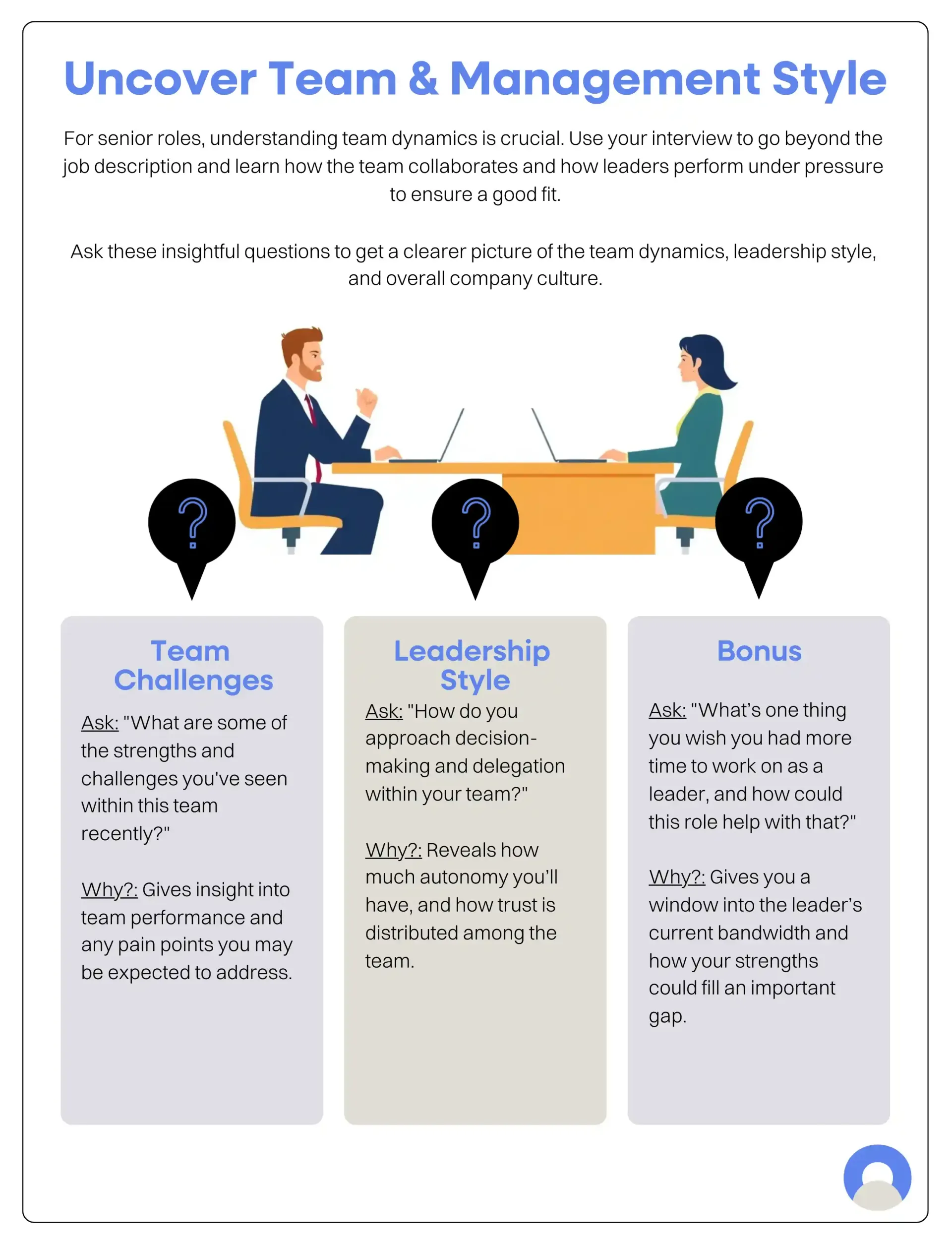
Dig Into the Team and Management Style: Questions to Ask About Team Dynamics
Top Questions for a Clearer Picture
Here are two interview questions that offer valuable insight into the dynamics of the team and leadership style:
2. “What’s the biggest challenge your team faced last quarter, and how did you work through it together?”
This question helps you understand:
- How the team communicates and solves problems.
- How the manager leads during high-pressure situations.
- What the day-to-day work environment actually feels like.
3. “What’s something people who thrive here do differently from those who struggle?”
This gives you insight into:
- The company's culture and definition of success.
- The specific interpersonal skills and habits that are valued.
- Whether your working style aligns with the team’s expectations.
These types of questions help you move beyond surface-level info and evaluate whether the role and the people you’d be working with support your career growth and values.
Think Ahead: Ask About Development and Long-Term Goals
If you’re interviewing for a role where you could realistically stay and grow, it’s important to understand how the company views career growth and long-term development. Questions about professional development opportunities demonstrate your long-term interest in the company.
Questions That Show You're Thinking Ahead
Here’s a powerful question to ask:
4 “What does the company do to support ongoing professional development and growth?”
This question tells the hiring manager you’re not just job-hopping, you’re:
- Focused on your career development.
- Looking for an employer that invests in its new employees.
- Thinking long-term about how you’ll add value and develop your skills.
You can also ask:
5 “What career paths have others in this role taken after success in this position?”
This gives you insight into:
- How the company defines and rewards success.
- Whether there's a realistic path toward your career goals.
- What kind of internal mobility or leadership development exists.
In today’s market, where retention matters and employees expect more than a paycheck, asking these kinds of interview questions positions you as someone who’s thinking beyond the next 12 months. That’s something top employers value.
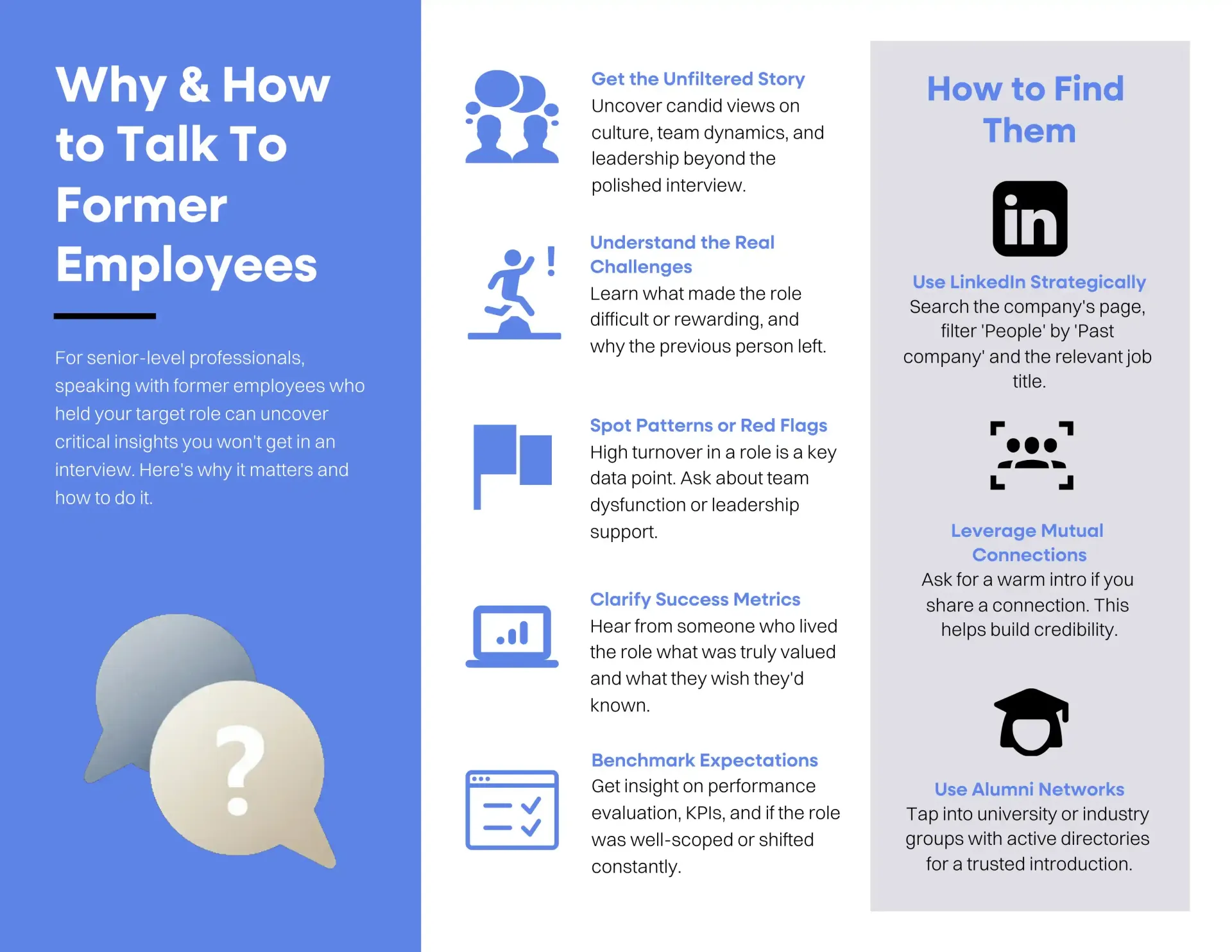
What You Can Learn From Past Employees (And How to Ask About It)
Asking about past employees might feel uncomfortable, but when done thoughtfully, it can reveal critical insights about the position, team dynamics, and how success is measured. Tailor questions to the interviewer to get varied perspectives, such as asking a hiring manager about their leadership style or a potential co-worker about team culture.
A Question That Surfaces Red Flags and Opportunities
A strong question to ask is:
6 “What are the main challenges people have faced in this role in the past, and what would you want a new hire to do differently to overcome those issues?”
This type of interview question can uncover:
- Gaps in onboarding or team support that you should be aware of.
- What it really takes to succeed in this position, not just on paper, but in practice.
- Patterns of struggle in the role, whether it's tied to communication skills, management style, or unclear expectations.
It also shows the hiring manager that:
- You’re self-aware and not afraid of tough questions.
- You’re proactive about evaluating success before stepping in.
- You’re already thinking about how to avoid past missteps and contribute differently than previous job candidates.
Understanding the experience of those who came before you can help you determine whether the role is a good fit, and whether the company is learning from past challenges to support its new employees.
Use Questions to Uncover Real-Time Problems You Can Solve
Hiring managers aren’t just looking to check boxes; they’re looking for someone who can help the team move forward. That’s why some of the best questions to ask at the end of an interview are those that show you're a problem solver.
Questions That Position You as a Problem Solver
7 “What inefficiency or challenge do you most hope this hire will help solve?”
This single question allows you to:
- Get a better sense of expectations—what’s top-of-mind for the team right now.
- Show initiative and problem-solving skills—you’re not waiting to be told what to do.
- Open the door to a more strategic conversation about how your experience fits the team’s needs.
Another strong way to phrase it:
8 “What’s one challenge the team is currently facing that I could help address in this role?”
These types of questions demonstrate:
- You’re already thinking like part of the team.
- You’re interested in making an impact, not just getting hired.
- You want to understand the challenges in a typical day, not just the high-level job description.
For job candidates aiming to stand out in competitive interview processes, asking these questions signals that you're serious about solving problems, not just filling a seat.
At the End of an Interview: Leave with Impact
The end of an interview is one of the most valuable moments in the entire interview process. How you use it can set you apart from other job candidates.
Ask the Question Most People Don't Think to Ask
9 “What have you not told me about the job that is crucial in determining if this opportunity is a good fit for both of us?”
This type of question is powerful for several reasons:
- It shows you're focused on long-term alignment, not just landing the job.
- It invites the hiring manager to share anything important that hasn’t come up yet.
- It opens the door for honest, thoughtful reflection leading to a more transparent conversation.
This is not a fundamental question; it leaves a positive impression and positions you as someone who takes ownership of your own career decisions.
You're not asking to “fill time.” You’re asking because you want to fully understand the position, the team, and whether the role truly aligns with your career plans.
Great candidates use the final moments of the interview to leave hiring managers thinking:
“That was a great question. They’d make a strong addition to the team.”
Clarify the Next Steps and the Hiring Process
As the interview wraps up, don’t miss the opportunity to ask one of the most practical, but often overlooked, interview questions:
10 “What are the next steps in the process?”
Why It's Important to Ask About Next Steps
Prepare questions about the next steps in the hiring process and ask if there's anything else to provide to assist in the hiring decision.
It’s a small question with a big impact. It allows you to:
- Show your continued interest in the role and the company.
- Clarify the timeline and expectations, including follow-up interviews or decision points.
- Understand how the company structures its hiring process, which can vary widely by industry and size.
Knowing what to expect after the end of an interview helps you:
- Avoid unnecessary follow-ups or silence, which can create doubt.
- Mentally prepare for any next steps (e.g., panel interviews, assessments, reference checks).
- Send a more tailored follow-up email that aligns with the hiring manager’s cadence and tone.
It also demonstrates that you’re organized, proactive, and serious about the opportunity; qualities every potential employer wants to see in a candidate.
FAQ
1. Is it okay to bring written questions into the interview?
Yes, absolutely. In fact, bringing a list of well-prepared questions shows organization, intention, and preparation. Just make sure you're not reading them word-for-word—use them as a guide to steer a natural conversation. It’s especially helpful at the end of an interview when nerves or information overload can cause you to blank.
2. What if the interviewer already answered all my prepared questions?
If this happens, it’s a good sign; you were paying attention, and they were thorough. A great move is to pivot and say:
“You actually covered many of the questions I had prepared, which I really appreciate. That said, based on what we've discussed, I’d love to ask a few follow-ups.”
Then adapt one of your original questions or ask for examples, stories, or perspectives on what was already discussed. This shows you're listening and thinking critically in real time.
3. How do I ask questions without sounding like I’m grilling the interviewer?
Tone and delivery matter more than the question itself. Avoid rapid-fire questioning. Instead:
- Maintain a conversational tone.
- Read the room. If the interviewer is rushed or distracted, keep it concise.
- Introduce questions with context (“I was curious about…” or “From what I understand…”).
Think of it as building a dialogue, not running down a checklist.
4. Can I ask about compensation or benefits at the end of an interview?
Yes, but timing is key. If it’s a first-round interview, it’s usually better to wait until the employer brings it up, or until you're closer to an offer. If you do bring it up, frame it professionally:
“I want to be respectful of your process, but would it be appropriate at this stage to understand the general compensation range for this role?”
This keeps you informed without derailing the tone of the conversation.
5. Should I ask the same questions in every interview round?
Not exactly. While themes (like culture, expectations, and growth) may stay the same, tailor your questions to:
- The interviewer's role (peer vs. hiring manager vs. executive).
- What’s already been covered.
- The stage of the process.
In later rounds, your questions should evolve to focus more on team strategy, cross-functional dynamics, or long-term challenges. This shows progression in your understanding and interest.
6. What types of questions leave the strongest impression?
Questions that show:
- Self-awareness (what you need to thrive).
- Investment in mutual fit (not just your gain).
- Strategic thinking (how you can solve problems).
Strong candidates ask questions that elevate the conversation, not just confirm what they already know. Even asking about the company’s future direction, market risks, or team priorities can set you apart.
7. How many questions is too many to ask at the end of an interview?
Aim for 2–4 solid questions. The key is quality, not quantity. If you're short on time, prioritize the most strategic or high-impact questions.
Bonus: if you build strong rapport, the conversation often opens up naturally, giving you room for more questions without feeling forced.
8. What if I run out of time to ask questions at the end?
If the interviewer is out of time, don’t panic. Instead, say:
“I know we’re short on time, but I’d love to follow up with a few questions if you're open to that. Is it alright if I send a quick note later?”
Then follow up with a concise, professional email. This shows you’re still curious and respectful of their schedule.
9. Can asking the wrong questions hurt my chances?
Yes, but it's more about how a question is asked than the topic itself. Avoid:
- Overly personal or unrelated questions.
- Questions easily answered by the company website.
- Anything that sounds confrontational or self-serving.
A poorly timed or tone-deaf question can suggest lack of preparation or emotional intelligence. When in doubt, ask yourself: “Does this question show that I’ve done my homework and care about long-term fit?”
10. How do I use their answers to shape my follow-up email?
Great follow-up emails don’t just say “thank you," they show that you listened. Reference something specific the interviewer shared in response to your question:
“I appreciated your insight on how your team handled last quarter’s product shift; it gave me a clear picture of your problem-solving culture.”
Doing this reinforces your interpersonal skills, your attention to detail, and your enthusiasm for the role.
Bonus: A Quick List of My Favorite Interview Questions That Left an Impact
Over the years, especially during my time working with execs at Boeing and Amazon, some questions have stopped me in my tracks. Here's a consolidated list so you can use them to show you are the ideal candidate:
- “What inefficiency or challenge do you most hope this hire will help solve?”
- “What’s the biggest challenge your team faced last quarter, and how did you work through it together?”
- “What’s something people who thrive here do differently from those who struggle?”
- “What’s one challenge the team is currently facing that I could help address in this role?”
- “What is something I need to know about this role that is not in the job description?”
- “What does the company do to support ongoing professional development and growth?”
- “What have you not told me about the job that is crucial in determining if this opportunity is a good fit for both of us?”
- “What are the main challenges people have faced in this role in the past, and what would you want a new hire to do differently to avoid or overcome those issues?”
Final Thought: Interviews Are Conversations, Not Tests
If you take one thing from this post, let it be this: Use your questions strategically.
Don't just ask what's expected. Ask what matters. Because how you end the interview can be the difference between blending in and getting the offer.
My team and I at Broda Coaching help mid, senior, and executive-level professionals make their next career move through our Better Work program. If you're in need of support to advance your career, Apply Now to work with my team and I.
For more articles on interview strategy, job transitions, or career growth, check out other posts on the Broda Coaching website.